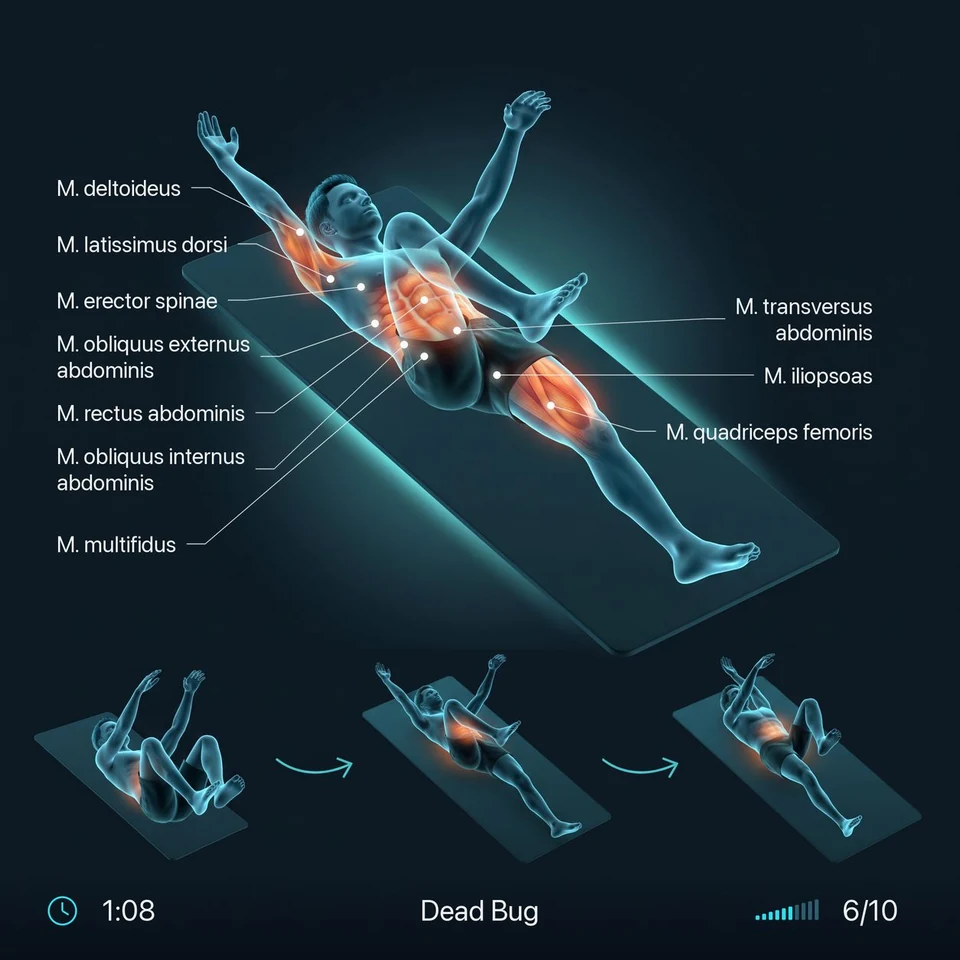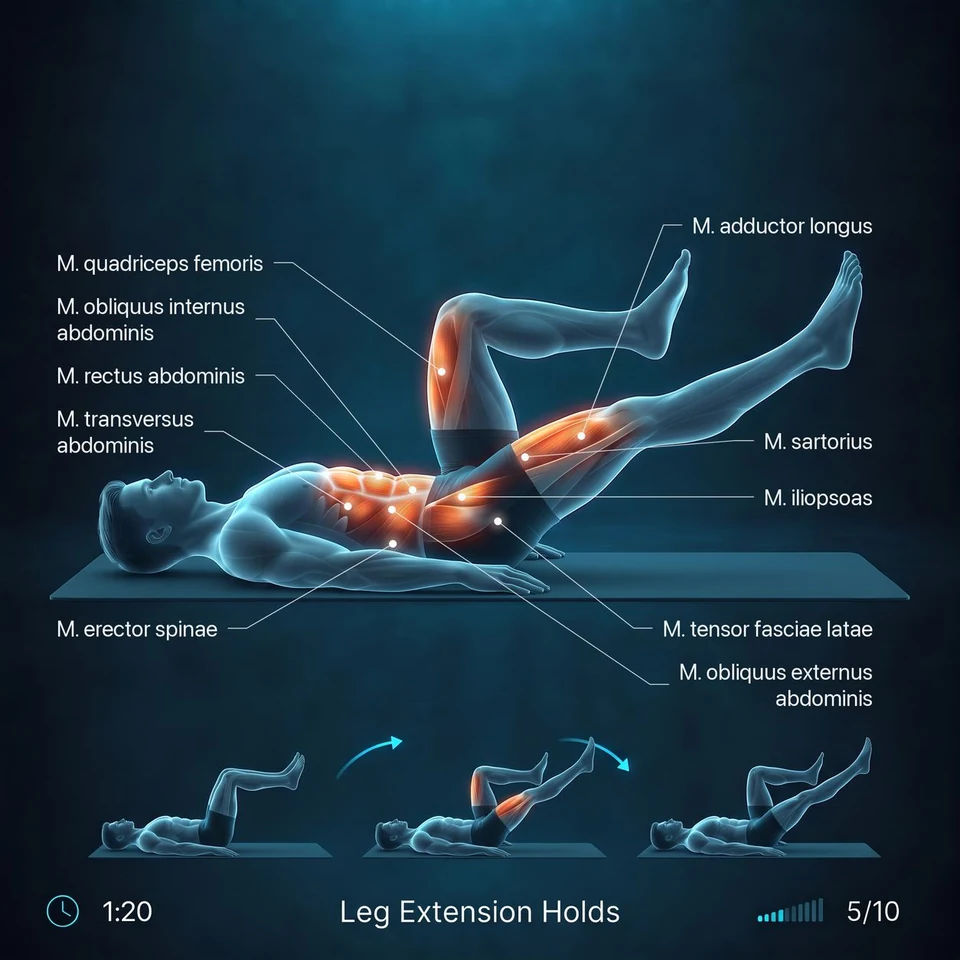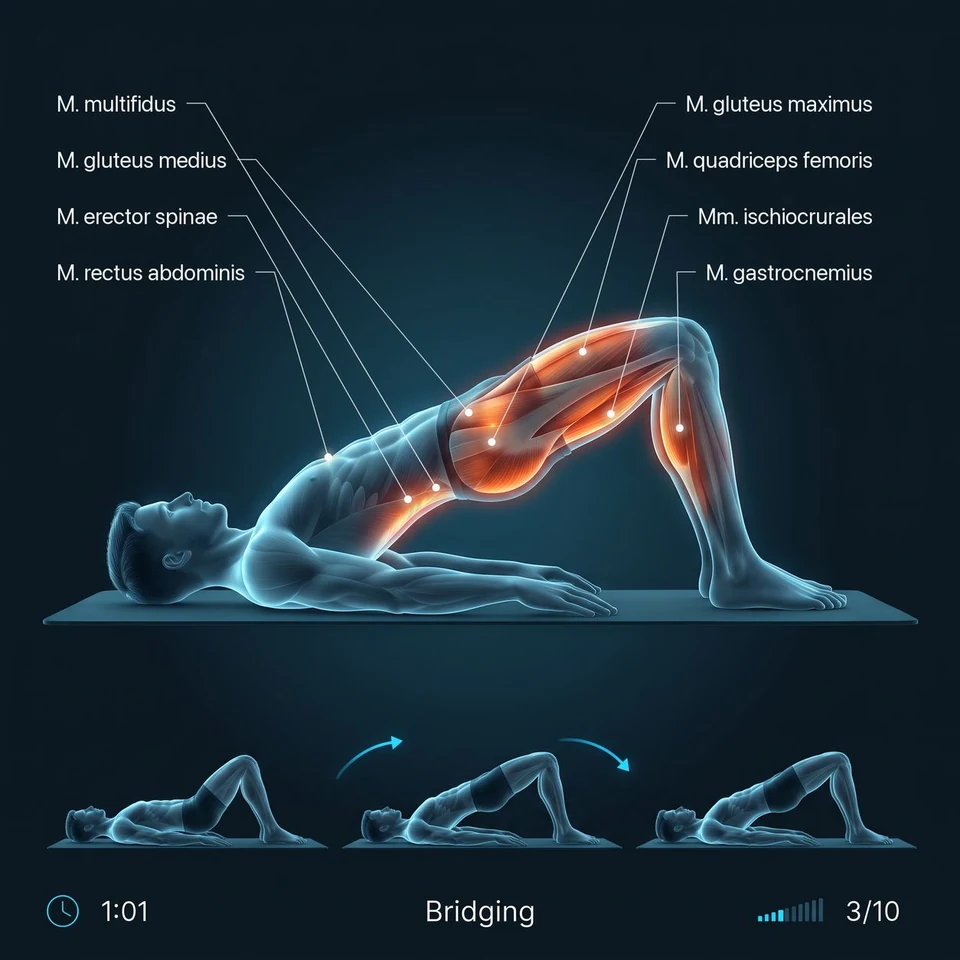
Core & Pelvis

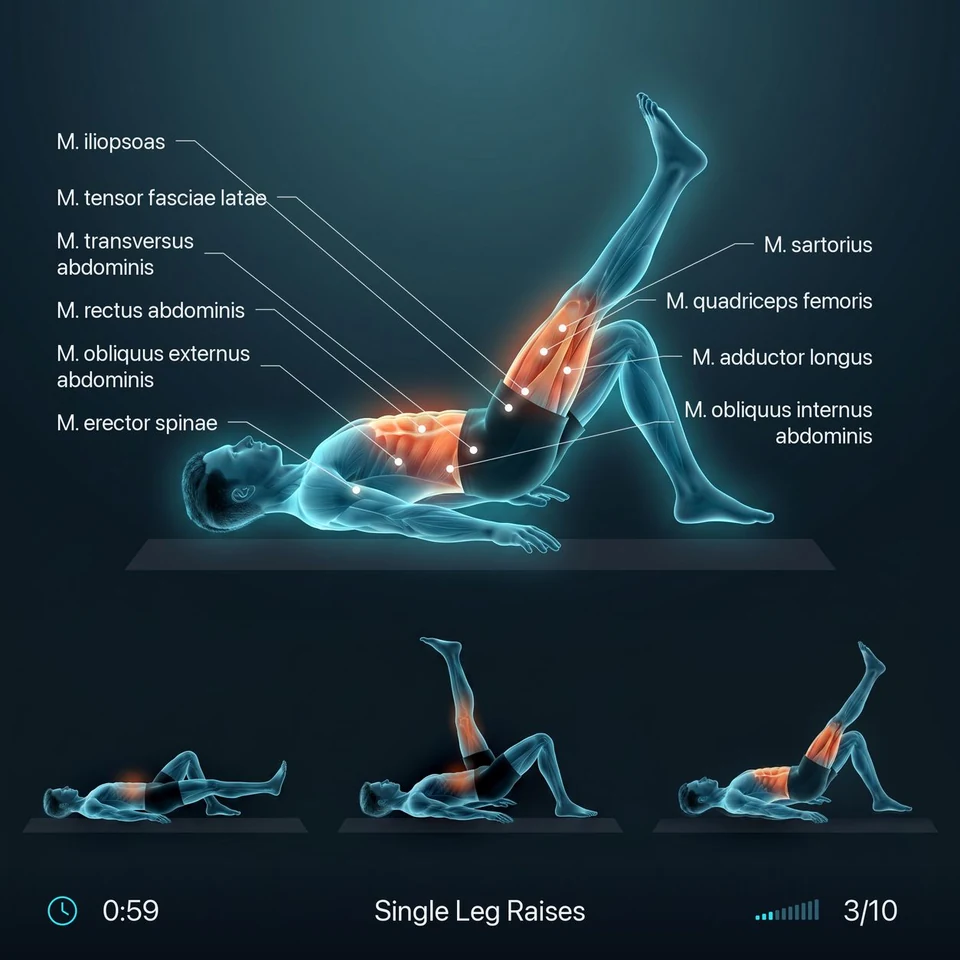
Single Leg Raises

  • 1:15 min
  • AR 3D / AR in the apps

Single Leg Raises: Starting position: Supine. The full 3D and AR demonstration is available in the Physio3D apps. Read the exercise instructions here.

Before you start · Supports your training. No individual suitability assessment.

Find this exercise in 3D and AR in the Physio3D apps. Read the instructions and exercise information here. Find your app

The exercise in detail

It is performed mostly lying on your back — the movement comes calmly and controlled from your center.

How the exercise works

  1. Starting position

    Lie flat on your back with your legs extended and your arms at your sides. Make sure your lower back is pressed firmly into the floor to engage the abdominal muscles.

  2. Slowly raise one leg until it reaches an angle of about 45 degrees to the floor.

  3. Keep the leg straight and your toes pointed toward the ceiling.

  4. Engage your abdominal and hip muscles to stabilize the position.

  5. Slowly lower the leg again without fully resting it on the floor, and repeat the movement.

  6. Switch legs after 30 seconds.

  7. Repetitions

    Perform the exercise for a total of 1 minute, switching legs after 30 seconds.
At a glance

Difficulty
3 of 10
Recommended duration
1 minute (30 seconds per leg)
Position
Supine
3D clip
01:16 min

Muscles trained

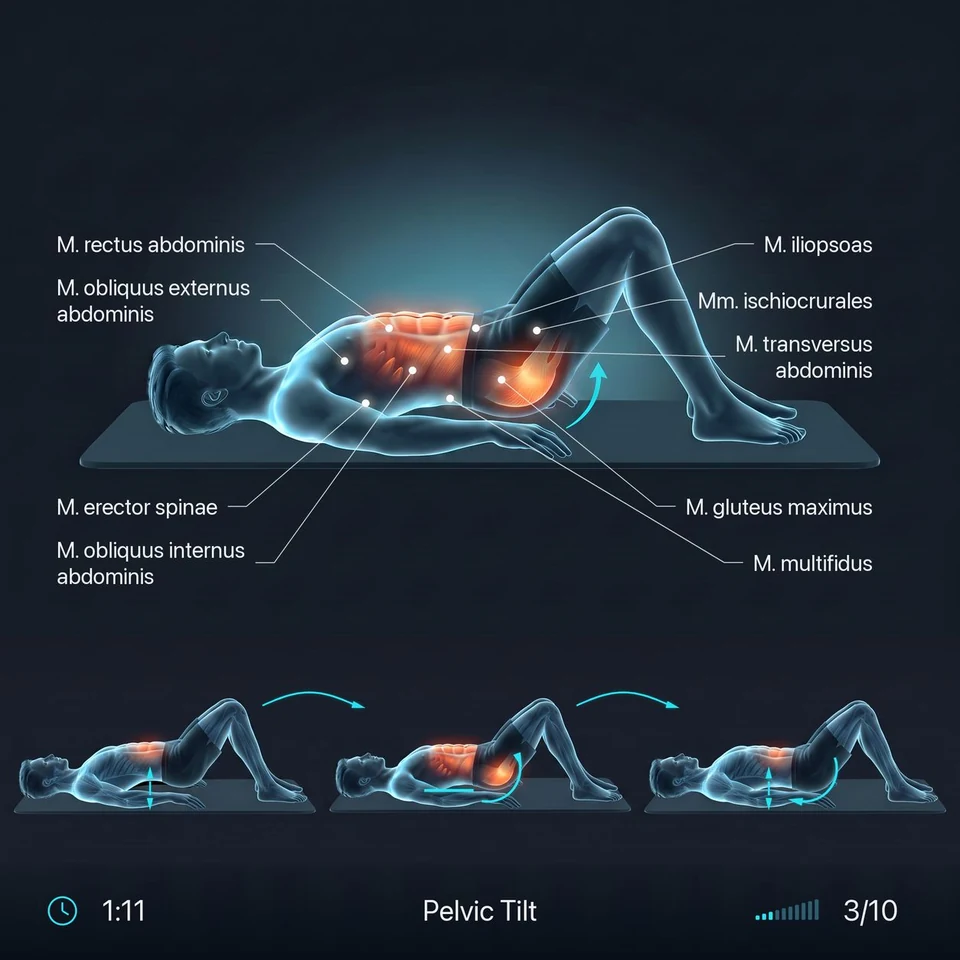
  • Iliopsoas (hip flexor)
  • Rectus abdominis (straight abdominal muscle)
  • Quadriceps femoris (front thigh muscle)
  • Gluteus maximus (large gluteal muscle)
  • Tensor fasciae latae (thigh fascia tensor)

Description

'Single Leg Raises' is a fundamental exercise for strengthening the hip and abdominal muscles. This exercise helps improve pelvic stability and strengthens the muscles of the lower body. It is especially useful for promoting control of the lower back and hips.

Tips

  • Keep your lower back pressed firmly into the floor throughout the exercise to avoid overloading the lumbar spine.
  • Move the leg slowly and with control to challenge the muscles optimally.
  • Exhale evenly as you raise the leg, and inhale as you lower it.

Variations

Harder
Raise both legs at the same time to increase the load on the abdominal muscles, or hold the raised leg in the air for several seconds before lowering it.
Easier
Bend the knee of the leg you are raising slightly to reduce the load and make the exercise easier.

Classification

Training name
Single Leg Raises Training

When to be careful

Skip this exercise or check with your doctor or physical therapist first if any of these apply to you:

  • Acute back injuries
  • Severe lumbar spine instability
  • Hip joint complaints
  • Recent surgery in the hip or trunk area

What this exercise is intended for

  • Improved hip stability
  • Strengthening of the abdominal and hip muscles
  • Improved control of the lower back
  • Conditioning for the hips and back

Information from the Physio3D app exercise catalog — not a medical claim or promise of results.

Related exercises

This exercise in the app

All 50 exercises, plus training plans and your progress at a glance — free for iPhone, iPad, and Apple Vision Pro.

Physio3D is a supportive training tool and does not replace medical advice, diagnosis, or therapy. If you have any health concerns, please consult a doctor or physical therapist.

Exercise

Physio3D is a supportive training tool and does not replace medical advice, diagnosis, or therapy. If you have any health concerns, please consult a doctor or physical therapist.