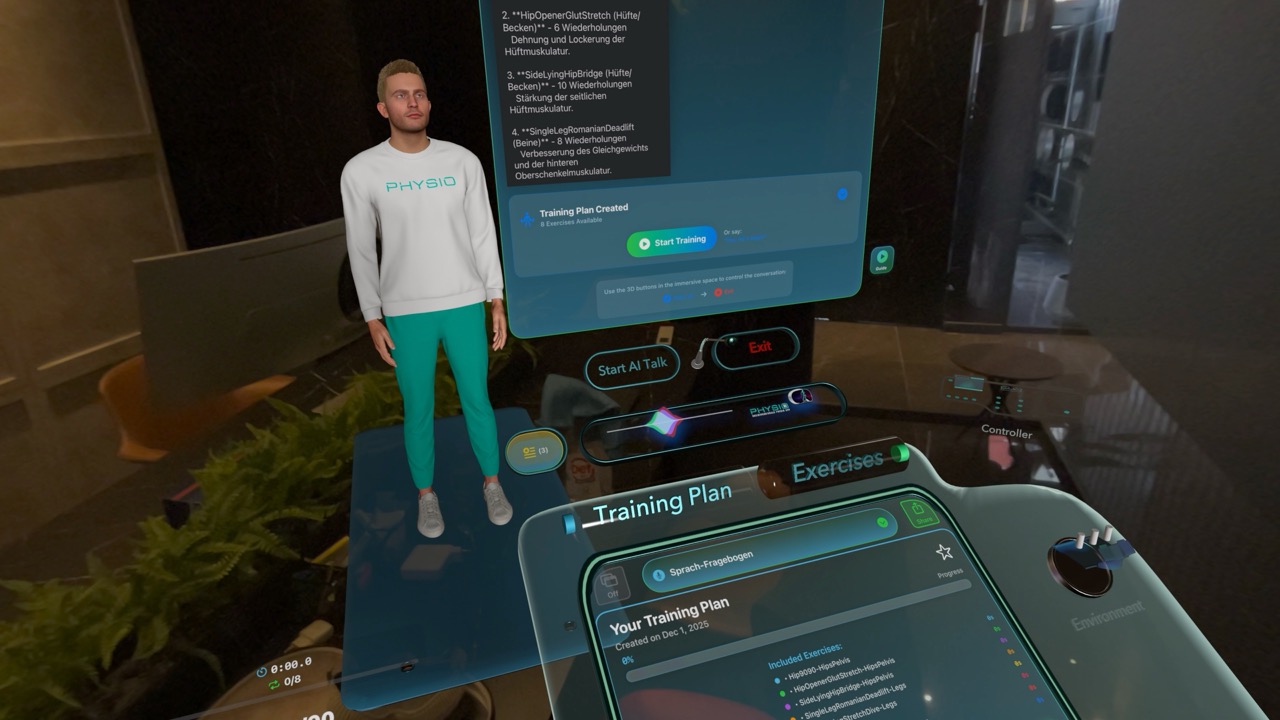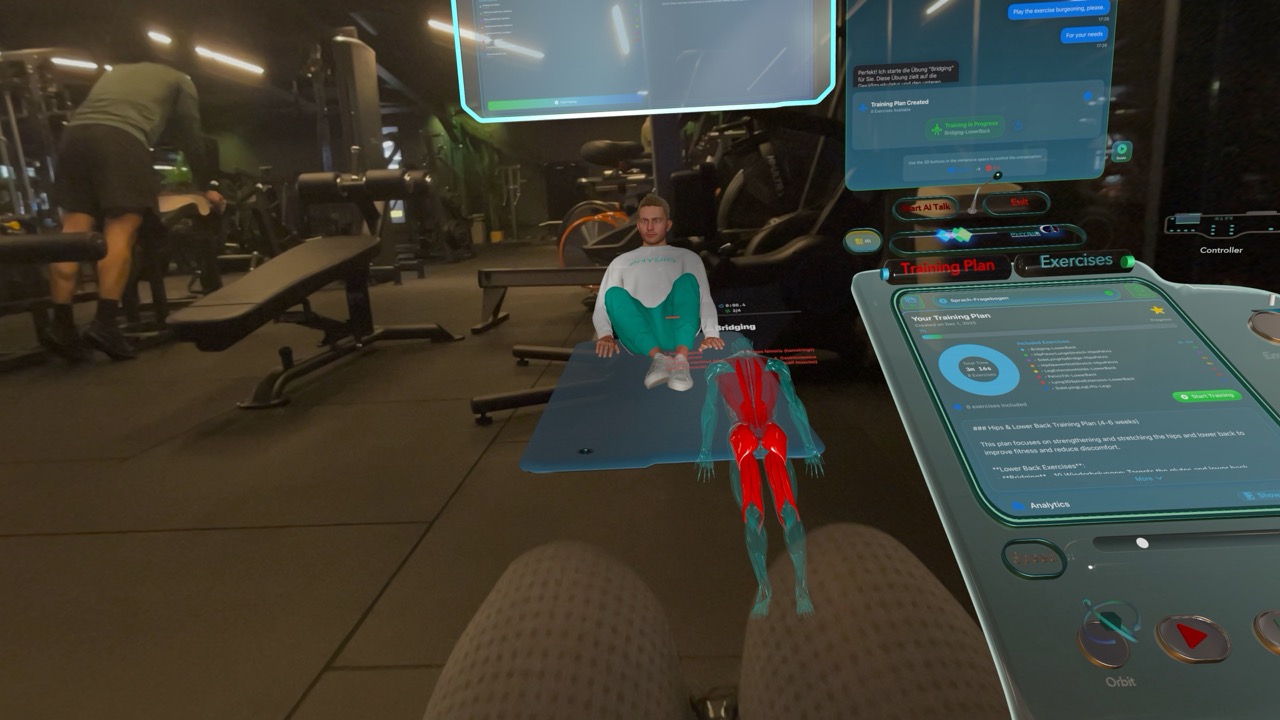
Mixed reality can already do a lot for physical therapy: a life-size 3D coach stands in the middle of your living room, shows every exercise from every angle, and responds to your voice — while you still see your real surroundings. That’s exactly what Physio3D offers on Apple Vision Pro, as the world’s first physical therapy app for the device.
An honest answer also includes what mixed reality can’t do: it doesn’t diagnose, doesn’t treat, and doesn’t replace an appointment with your therapist. It changes how exercises are shown, explained, and guided — not the therapy itself.
What that means in practice, what the training feels like, and who should take a look today — you’ll find it all here.
What is mixed-reality training?
Mixed reality (MR) blends your real environment with digital content. Unlike virtual reality, you don’t disappear into a fully artificial world: Apple Vision Pro places digital objects in your actual room — you still see your furniture, your walls, the floor under your feet. Apple calls this spatial computing.
For exercising, that fundamentally changes the starting point. An exercise is no longer a video on a flat screen, filmed from a single camera angle. It becomes a spatial event: a life-size 3D coach stands in front of you — you can walk around him, step closer, check the foot placement from the side and the arm movement from the front. The question “Wait, how was that supposed to go?” often answers itself once you see the movement right there in your room.
What can Physio3D on Vision Pro do today?
A life-size 3D coach in your own room. The coach stands right where you train — at full scale, in 3D, viewable from every angle. No more guessing in front of a 2D video.
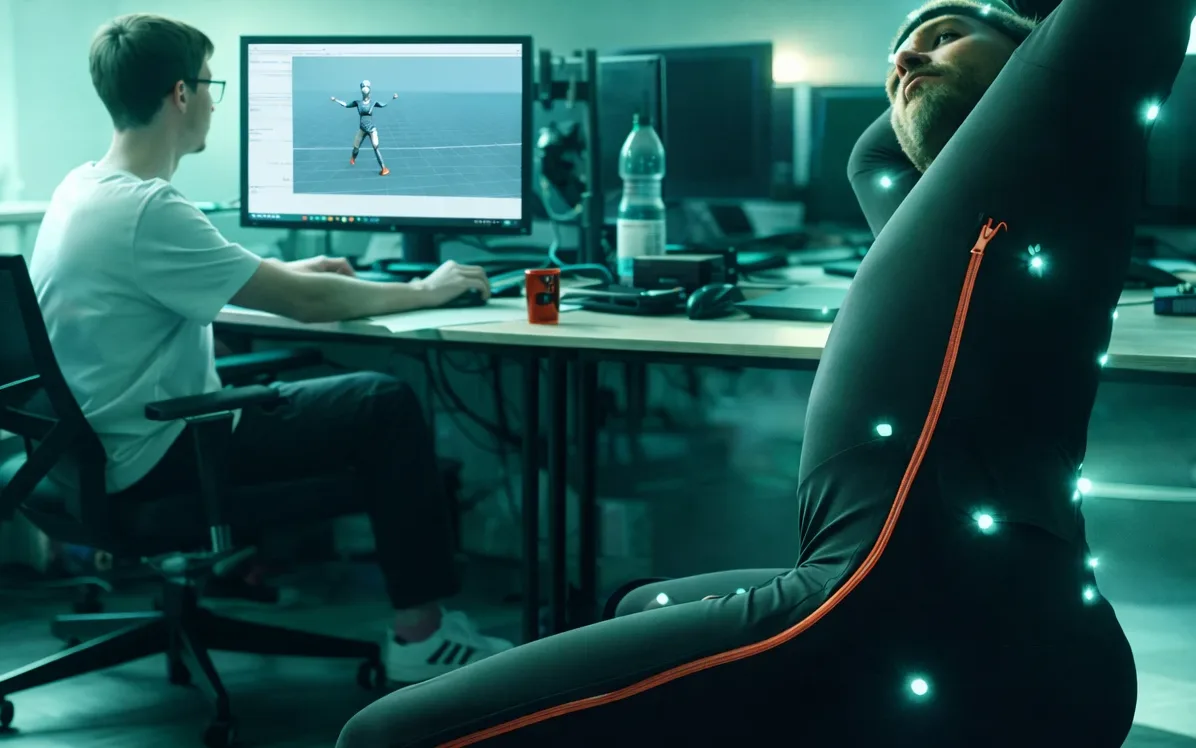
Movements from real motion capture. All 50+ exercises were recorded at a studio in Cologne using professional motion capture. So the coach doesn’t show synthetic, off-the-shelf animations — it shows real, cleanly executed movements.
Mixed reality or fully immersive. You choose: train in your own living room with a full view of your surroundings — or in a calm, immersive training environment with zero distractions.
Hands-free voice control. With Physia AI, you steer your training by voice: start a plan, ask questions, move to the next exercise — no controllers, no menus. Your hands stay free for what matters: the movement.
Plan analytics. More than 20 KPIs document your training and show what you’ve completed — a solid basis for the conversation at your next appointment, too.
You’ll find all features and the App Store link on the page for Physio3D for Apple Vision Pro.
What mixed reality is not
As exciting as the technology is — three things deserve to be named clearly:
Not a replacement for therapy. Assessment, diagnosis, and treatment plans belong to your doctor and therapist. Vision Pro shows exercises, reminds you, and documents — it doesn’t judge your health. Physio3D is a supportive tool, always complementing your therapy.
Not a shortcut. You still have to do the exercising yourself. Mixed reality lowers the hurdles — the guidance gets clearer, the setting more motivating — but nobody does the reps for you.
Not a distant future. The flip side is also true: this isn’t a concept video. The app is available on the App Store today — in four languages (English, German, Spanish, French), including spoken exercise instructions — and runs on every Apple Vision Pro.
Who should take a look today?
Practices that want to offer their patients a modern exercise format for home. Anyone who already owns a Vision Pro and wants to use it beyond movies and work. And anyone curious where digital exercising is headed — because what runs on Vision Pro today is a fairly concrete preview of what exercise guidance will look like in a few years.
Don’t have a Vision Pro? The Physio3D ecosystem is also available for iPhone and iPad — with the same exercise library, Physia AI as a voice coach in Physio3D Realtime, and private on-device AI (Apple Intelligence) in every app. And if you’d like to get a feel for the 3D training world first, you can explore it right in your browser — on our interactive page What is Physio3D.
Bottom line: spatial exercising is no longer a vision of the future
Mixed reality turns abstract exercise instructions into a movement you can see, walk around, and truly understand — today, not someday. It’s not a replacement for therapy, and it isn’t meant to be: it’s the better tool for the part of your training that happens at home.
Discover Physio3D for Apple Vision Pro — the world’s first physical therapy app for Vision Pro.