Neck & Shoulders

NeckNod

  • 1:04 min
  • 🔊 Voice guidance
  • AR AR available

NeckNod: Starting position: Seated. The public 3D demo shows the recorded movement with voice guidance.

Before you start · Supports your training. No individual suitability assessment.

The exercise in detail

Your head and shoulder girdle are guided slowly and deliberately through their range of motion — no momentum, at your own pace.

How the exercise works

  1. Starting position

    Sit upright and draw your shoulder blades back and down. Lower your chin toward your chest as if making a double chin, to lengthen your neck.

  2. Slowly draw the back of your head backward without losing the double chin.

  3. Make sure your shoulder blades stay together throughout the exercise and your neck stays long.

  4. Hold this position for 10 seconds.

  5. Slowly return to the relaxed starting position.

  6. Repetitions

    Repeat the exercise five times.
At a glance

Difficulty
3 of 10
Recommended duration
1 minute
Position
Seated
3D clip
01:03 min

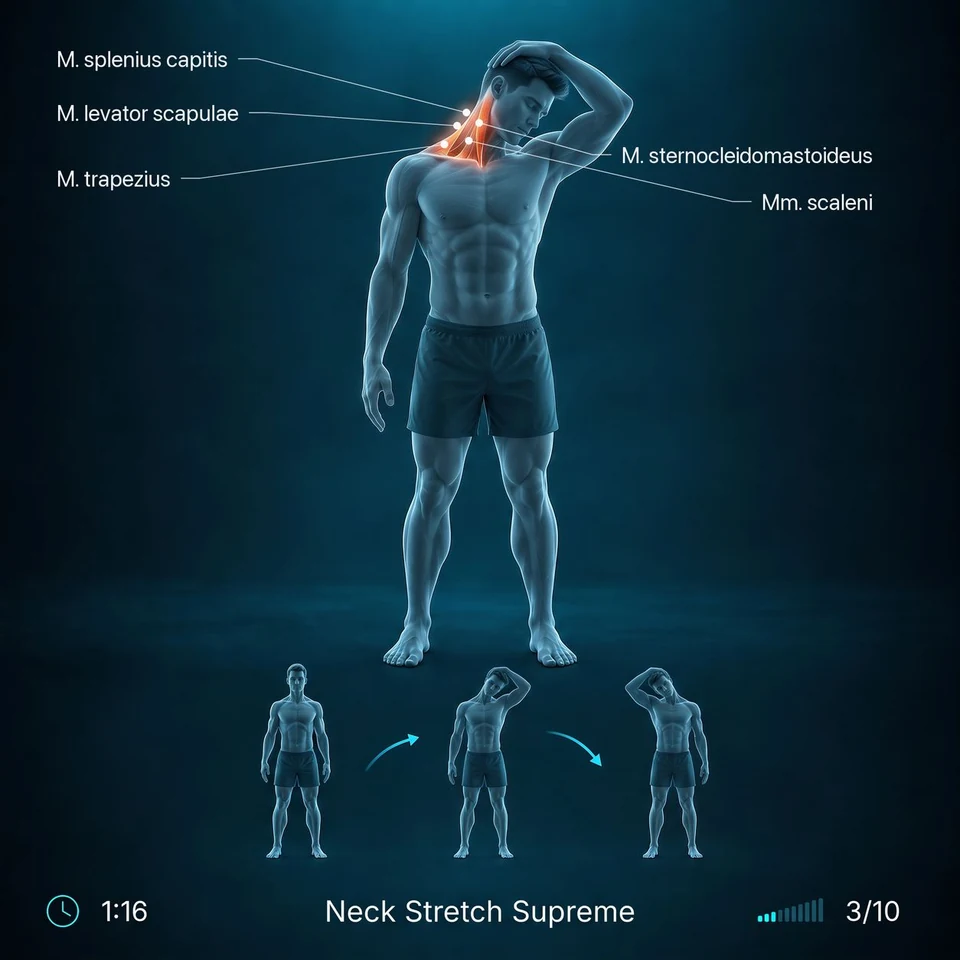
Muscles trained

  • Sternocleidomastoid (head rotator)
  • Splenius capitis (head strap muscle)
  • Longus colli (long neck muscle)
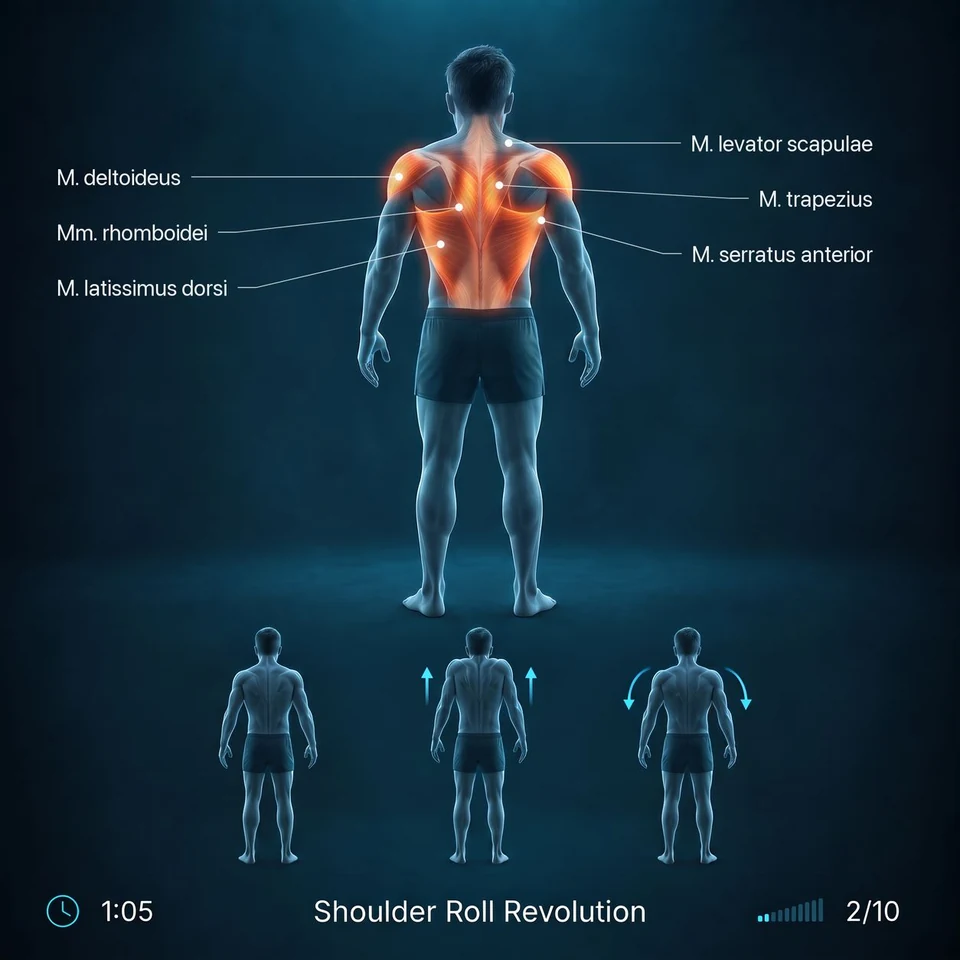
  • Trapezius (trapezius muscle)
  • Levator scapulae (shoulder blade lifter)

Description

The Neck Nod exercise is a targeted movement for strengthening and stabilizing the neck, especially the upper body and the neck region. It helps improve neck stability and is used as conditioning for the neck. It improves head posture and also loosens the neck and shoulder muscles.

Tips

  • Keep your shoulders relaxed and avoid pulling them up.
  • Breathe in deeply while holding the position, and out as you return to the starting position.
  • Perform the movement slowly and with control to stretch and strengthen the neck muscles precisely.

Variations

Harder
Perform the exercise standing to challenge stability further. Keep your knees slightly bent and hold your posture stable.
Easier
Hold the position for only 5 seconds and then return to the starting position. Repeat the exercise three to four times instead of five.

Classification

Focus areas
Upper body, neck
Training name
Neck Nod Training

When to be careful

Skip this exercise or check with your doctor or physical therapist first if any of these apply to you:

  • Acute neck injuries
  • Severe cervical spine instability
  • Uncontrolled muscle spasms in the neck
  • Recent surgery in the neck area
  • Acute pain during the exercise

What this exercise is intended for

  • Improved neck stability
  • Conditioning for the neck
  • Improved head posture
  • Loosening the neck and shoulder muscles

Information from the Physio3D app exercise catalog — not a medical claim or promise of results.

Related exercises

This exercise in the app

All 50 exercises, plus training plans and your progress at a glance — free for iPhone, iPad, and Apple Vision Pro.

Physio3D is a supportive training tool and does not replace medical advice, diagnosis, or therapy. If you have any health concerns, please consult a doctor or physical therapist.

Exercise

Loading character …

Physio3D is a supportive training tool and does not replace medical advice, diagnosis, or therapy. If you have any health concerns, please consult a doctor or physical therapist.

Exercise

Physio3D is a supportive training tool and does not replace medical advice, diagnosis, or therapy. If you have any health concerns, please consult a doctor or physical therapist.