Side-Lying

Side Lying Hip Bridge

  • 2:21 min
  • AR 3D / AR in the apps

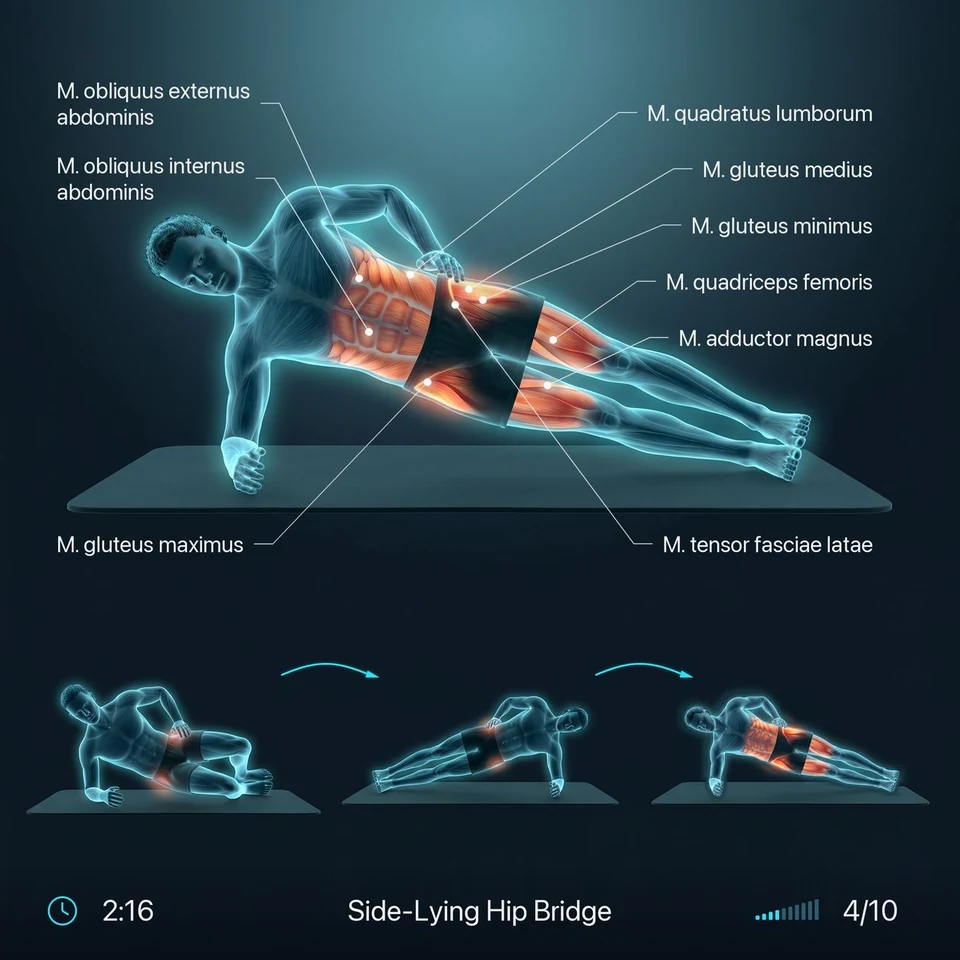
Side Lying Hip Bridge: Starting position: Side-lying. The full 3D and AR demonstration is available in the Physio3D apps. Read the exercise instructions here.

Before you start · Supports your training. No individual suitability assessment.

Find this exercise in 3D and AR in the Physio3D apps. Read the instructions and exercise information here. Find your app

The exercise in detail

You lie on your side; the movement comes from the hip and leg while the torso stays stable.

How the exercise works

  1. Starting position

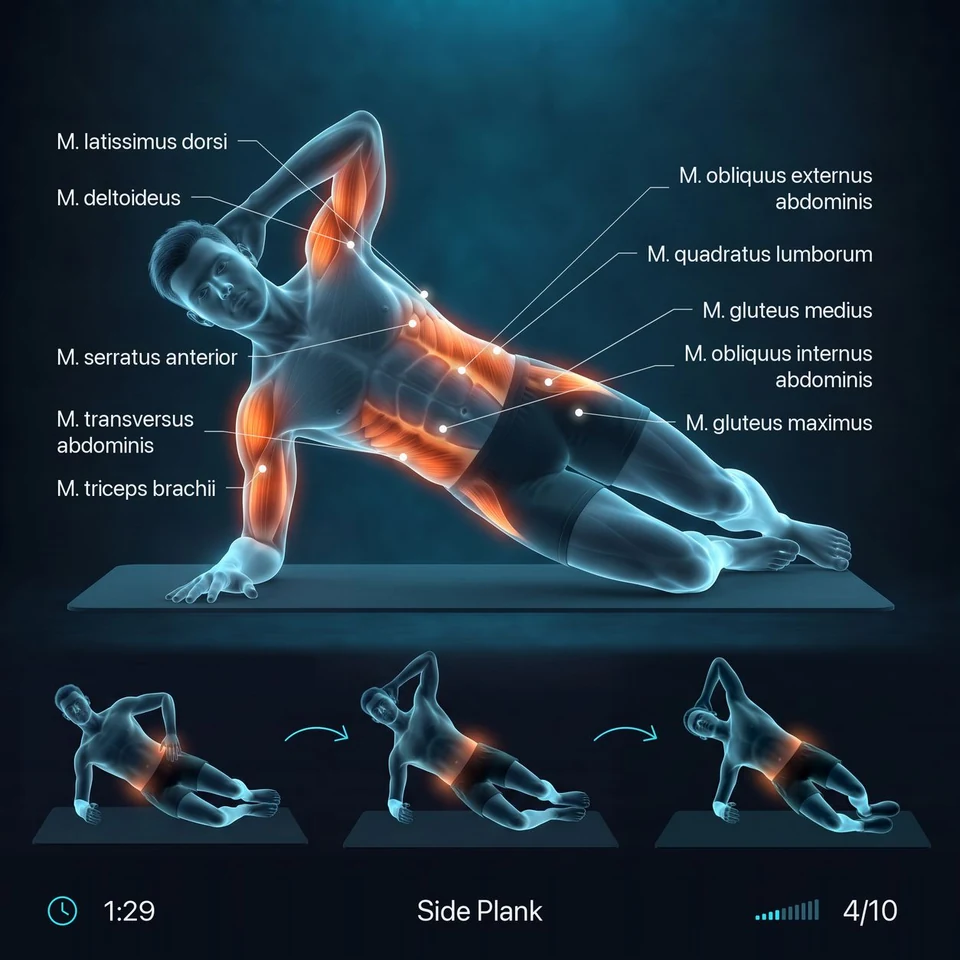
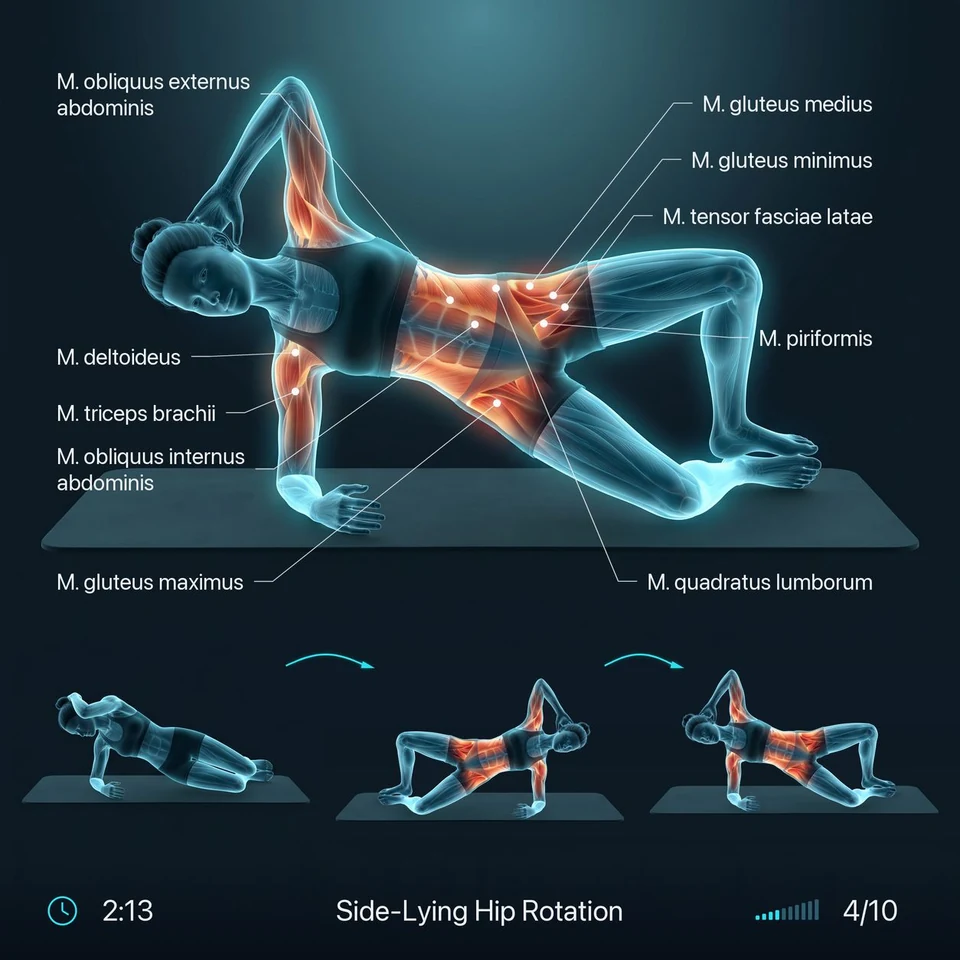
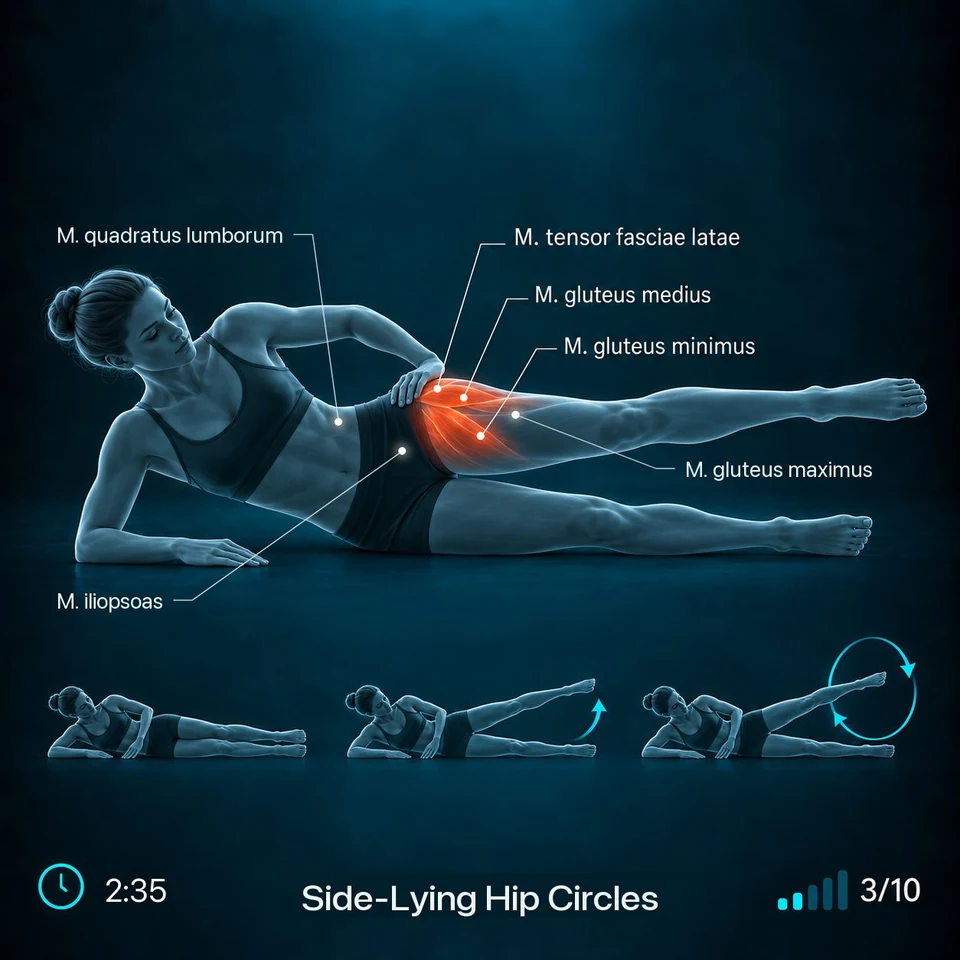
    Lie on your side with your legs extended and your feet stacked. The lower arm can be placed in front of your body for stabilization, while the upper arm rests on your hip.

  2. Slowly raise your upper leg while pushing your hip upward so that your body forms a straight line from your shoulders to your feet.

  3. Hold the position briefly and then slowly lower your hip again without fully resting it down.
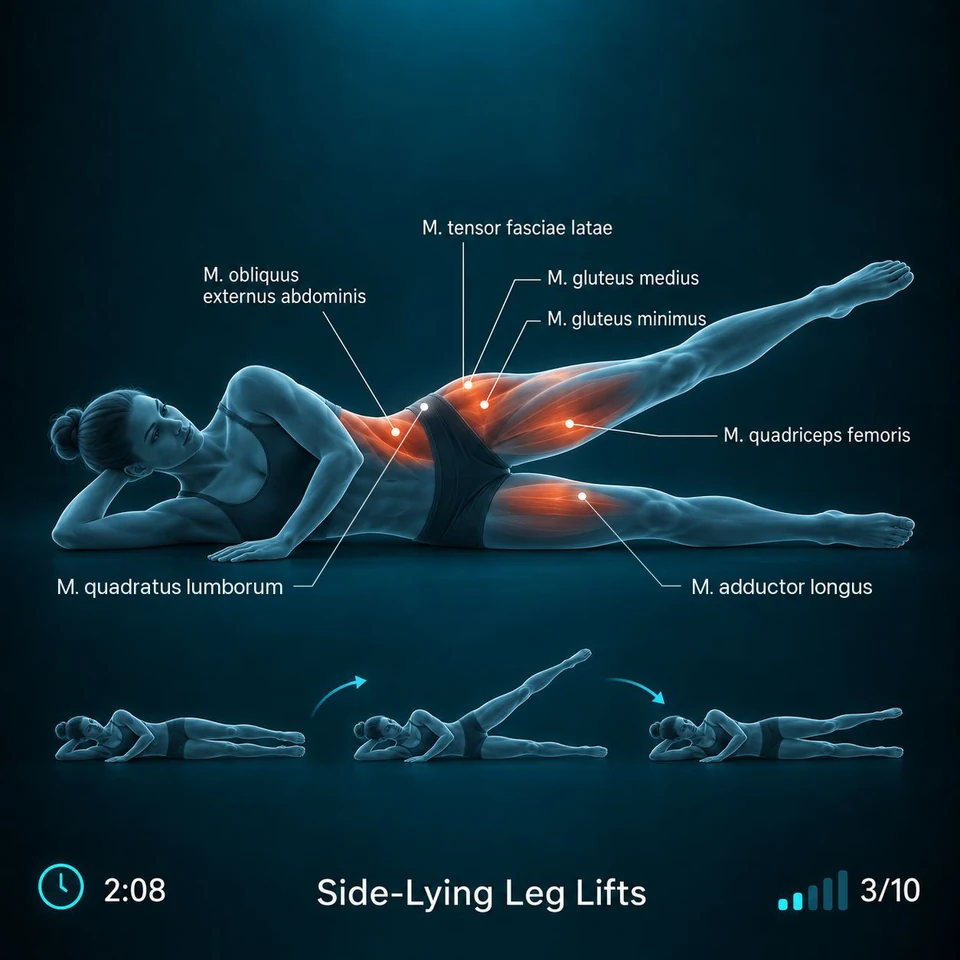
At a glance

Difficulty
4 of 10
Recommended duration
1 minute (30 seconds per side)
Position
Side-lying
3D clip
02:21 min

Muscles trained

  • Gluteus medius (middle gluteal muscle)
  • Gluteus minimus (small gluteal muscle)
  • Tensor fasciae latae (thigh fascia tensor)

Description

This exercise strengthens the lateral hip and gluteal muscles and promotes hip stability. It is ideal for improving lateral hip strength while increasing mobility.

Tips

  • Make sure your upper body stays stable and does not tilt forward or backward.
  • Perform the movement slowly and with control to specifically activate the hip muscles.
  • Breathe in and out deeply to support the movement.

Variations

Harder
Hold the hip bridge up longer or increase the number of repetitions.
Easier
Reduce the range of motion and gently rest your hip down to make the exercise easier.

Classification

Focus areas
Hip mobilization, hip stability
Training name
Side-Lying Hip Bridge Training

When to be careful

Skip this exercise or check with your doctor or physical therapist first if any of these apply to you:

  • Acute hip injuries
  • Hip instability
  • Severe osteoarthritis
  • Severe pain during the exercise

What this exercise is intended for

  • Improved lateral hip strength and stability
  • Strengthening the hip muscles
  • Strength training for the hips, agreed with your physio or doctor
  • Targeted strengthening of the lateral hip muscles

Information from the Physio3D app exercise catalog — not a medical claim or promise of results.

Related exercises

This exercise in the app

All 50 exercises, plus training plans and your progress at a glance — free for iPhone, iPad, and Apple Vision Pro.

Physio3D is a supportive training tool and does not replace medical advice, diagnosis, or therapy. If you have any health concerns, please consult a doctor or physical therapist.

Exercise

Physio3D is a supportive training tool and does not replace medical advice, diagnosis, or therapy. If you have any health concerns, please consult a doctor or physical therapist.