Shoulders & Neck

Chin Tuck

  • 1:09 min
  • 🔊 Voice guidance
  • AR AR available

Chin Tuck: Starting position: Standing. The public 3D demo shows the recorded movement with voice guidance.

Before you start · Supports your training. No individual suitability assessment.

The exercise in detail

The movement comes from the shoulder blades and cervical spine — small, precise, and calm.

How the exercise works

  1. Starting position

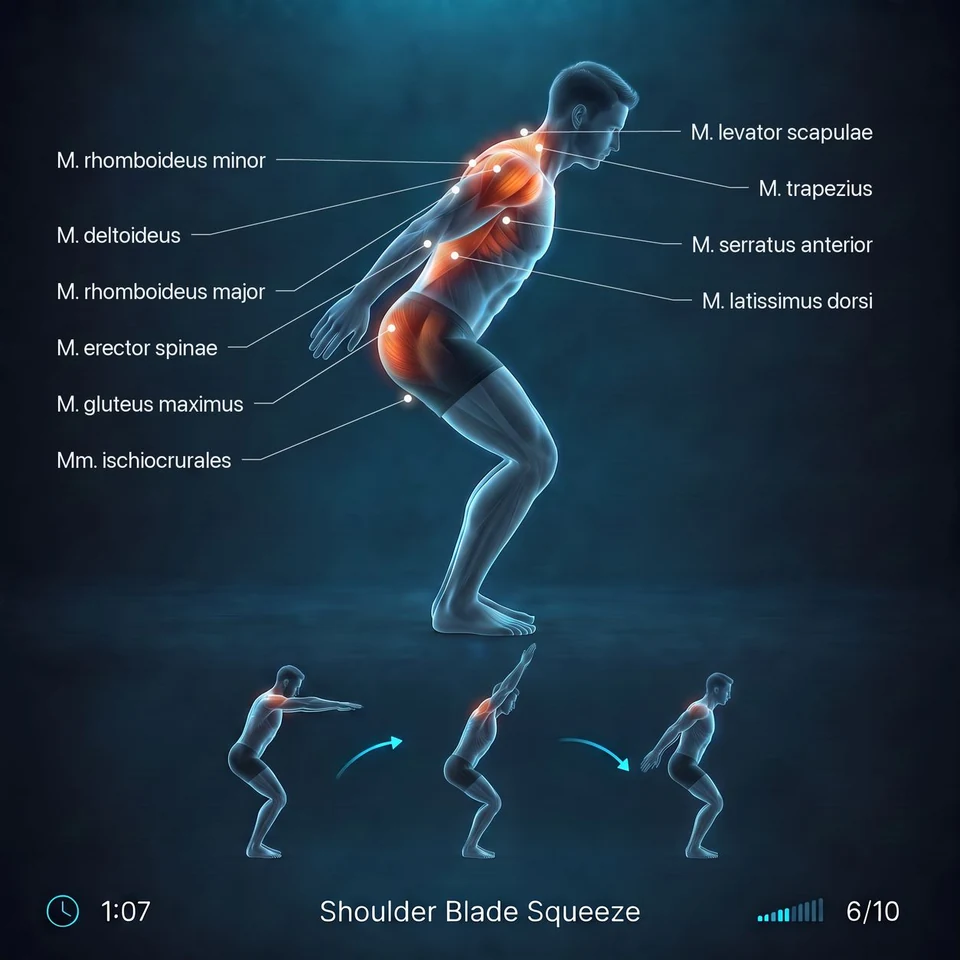
    Move into a comfortable squat position with your knees slightly bent and your body weight distributed evenly across both feet. The spine stays in a neutral position.

  2. Actively squeeze your shoulder blades back and down together.

  3. Rotate your extended arms outward so that a noticeable tension builds between your shoulder blades.

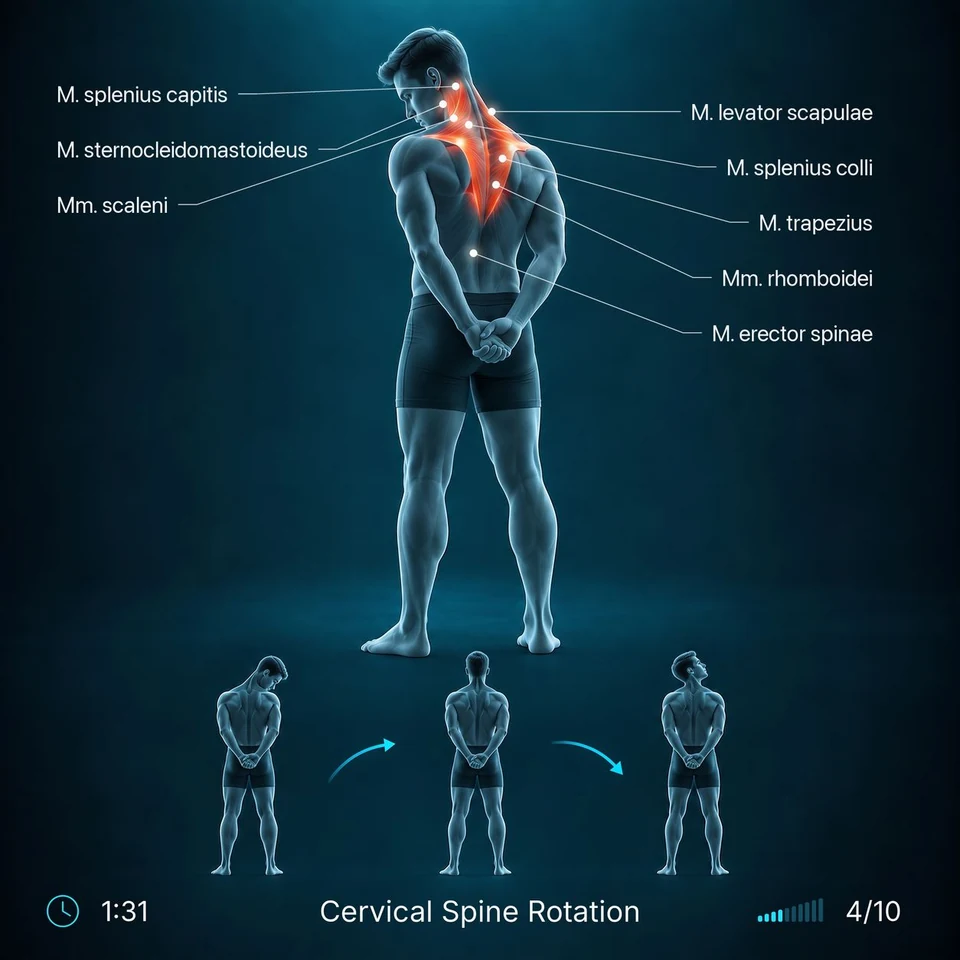
  4. Slowly draw your head back as if creating a double chin.

  5. Hold the position for 2 to 3 seconds and then slowly return to the starting position.

  6. Repetitions

    Perform the exercise for 1 minute.
At a glance

Difficulty
5 of 10
Recommended duration
1 minute
Position
Standing
3D clip
01:09 min

Muscles trained

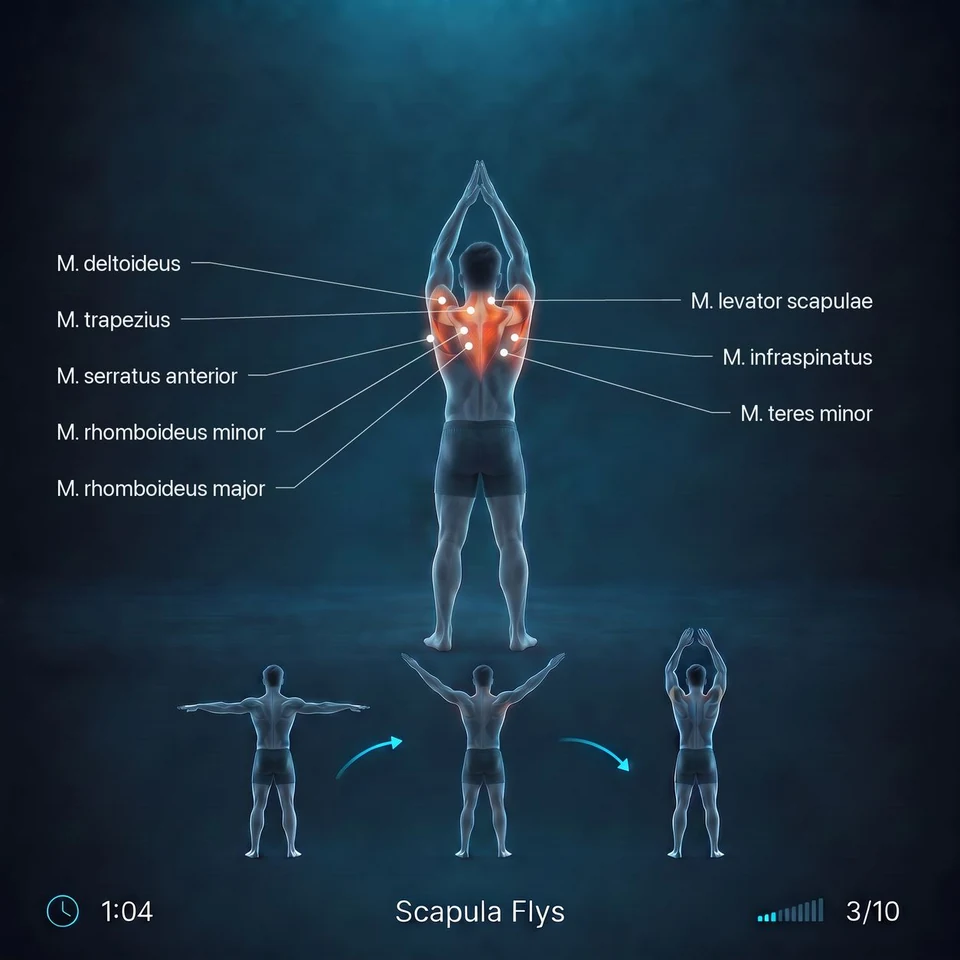
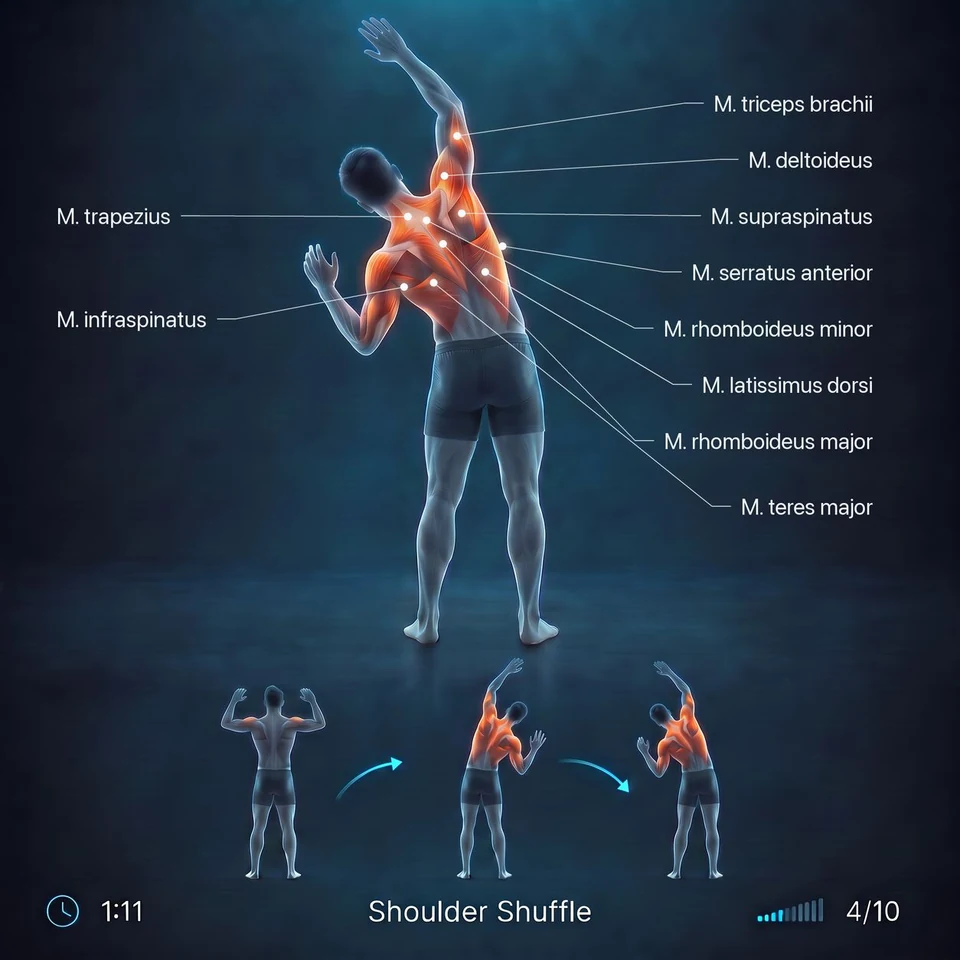
  • Trapezius (trapezius muscle)
  • Rhomboideus (rhomboid muscle)
  • Erector spinae (back extensor)
  • Splenius capitis (head strap muscle)
  • Levator scapulae (shoulder blade lifter)

Description

The Chin Tuck in the squat position is an exercise that improves both shoulder girdle stability and cervical spine alignment. Deliberately drawing the head back and activating the shoulder blade muscles specifically strengthens the neck and upper back muscles, which helps improve posture. The exercise is used as conditioning for the neck.

Tips

  • Keep your knees stable and your back straight.
  • Draw your head back with control and breathe in and out deeply as you perform the movement.

Variations

Harder
Perform the exercise in a deeper squat position or increase the duration of the head movements. Easier: reduce the depth of the squat position or shorten the duration of the head movements.

Classification

Focus areas
Trunk, neck, upper body
Training name
Chin Tuck Training

When to be careful

Skip this exercise or check with your doctor or physical therapist first if any of these apply to you:

  • Acute neck or shoulder injuries
  • Severe cervical spine instability
  • Acute pain during the exercise
  • Recent surgery in the neck or shoulder area
  • Dizziness or balance disorders

What this exercise is intended for

  • Improved posture in the shoulder and neck area
  • Strengthening of the neck and shoulder blade muscles
  • Improved trunk and neck stability
  • Loosening the neck and shoulder muscles

Information from the Physio3D app exercise catalog — not a medical claim or promise of results.

Related exercises

This exercise in the app

All 50 exercises, plus training plans and your progress at a glance — free for iPhone, iPad, and Apple Vision Pro.

Physio3D is a supportive training tool and does not replace medical advice, diagnosis, or therapy. If you have any health concerns, please consult a doctor or physical therapist.

Exercise

Loading character …

Physio3D is a supportive training tool and does not replace medical advice, diagnosis, or therapy. If you have any health concerns, please consult a doctor or physical therapist.

Exercise

Physio3D is a supportive training tool and does not replace medical advice, diagnosis, or therapy. If you have any health concerns, please consult a doctor or physical therapist.